
Safe and effective: a shared directive
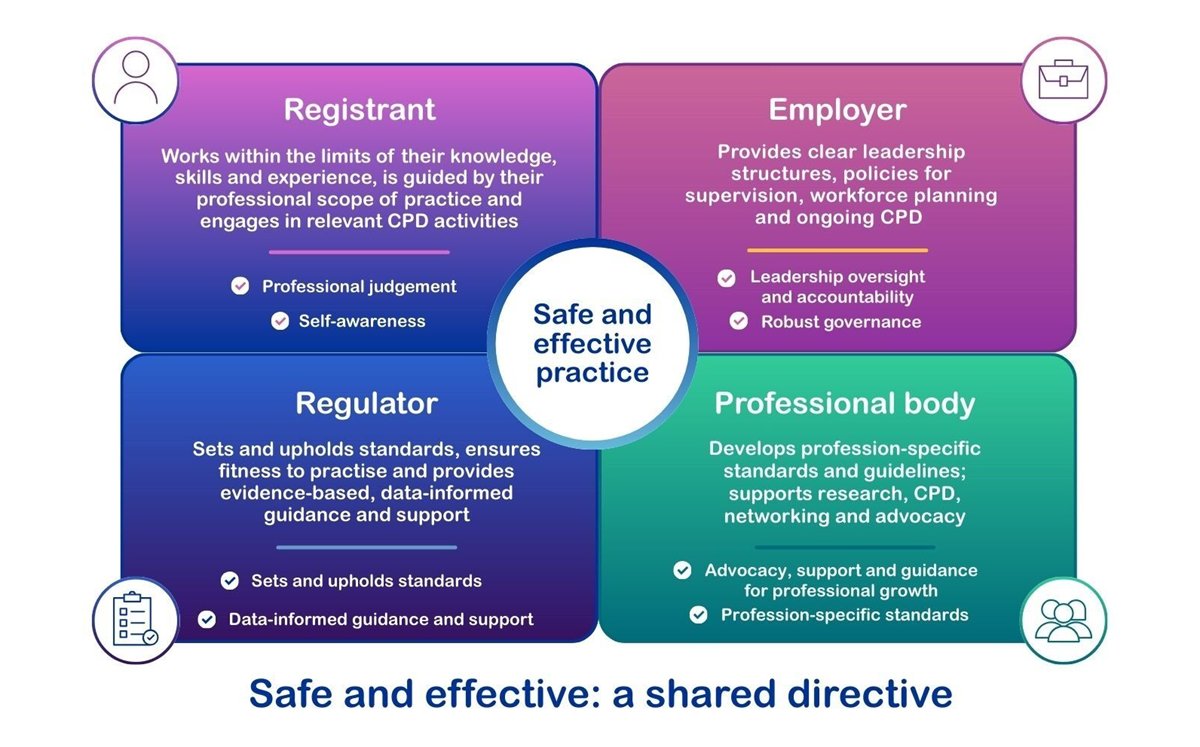
Safe and effective practice is a shared responsibility between the registrant, health and care regulators, the employing organisation (where appropriate) and professional bodies, all working together within a legal framework.
Registrants
As registrants, your role is to ensure you work within the limits of your knowledge, skills and experience. Using your professional judgement, you must:
- meet all regulatory standards which are relevant to your scope of practice;
- actively participate in supervision;
- have in place a professional indemnity arrangement for your practice; and
- undertake continuing professional development relevant to your scope of practice, participating in periodic audits when required.
Regulators
Regulation is part of the broader safety picture and on its own does not guarantee safe practice, including at the advanced levels of practice. You can find more information about regulating advanced levels of practice and what we do to protect the public.
Employers
Employing organisations need to have in place:
- clear leadership oversight and accountability for the workforce;
- a consistent understanding of advanced levels of practice (including at the operational level);
- workforce policies and processes to support advanced levels of practice including for supervision, delegation and scope optimisation;
- robust workforce planning including service design and deployment;
- consistent support for the workforce including education, training and supervision to meet regulatory requirements;
- job descriptions that map against the four pillars of practice; and
- defined scopes of practice that are reviewed at regular intervals.
Find more information for managers and employers on the Employer Hub.
Professional bodies
Professional bodies provide profession-specific guidance and support including in relation to scope of practice, advocacy and advice, research, and support for professional growth and continuing professional development.
Professional body membership may include professional indemnity arrangements, although in some instances registrants may need to make additional arrangements depending on their individual scope of practice.