
Helena Ward is a registered physiotherapist at an acute hospital and has several conditions
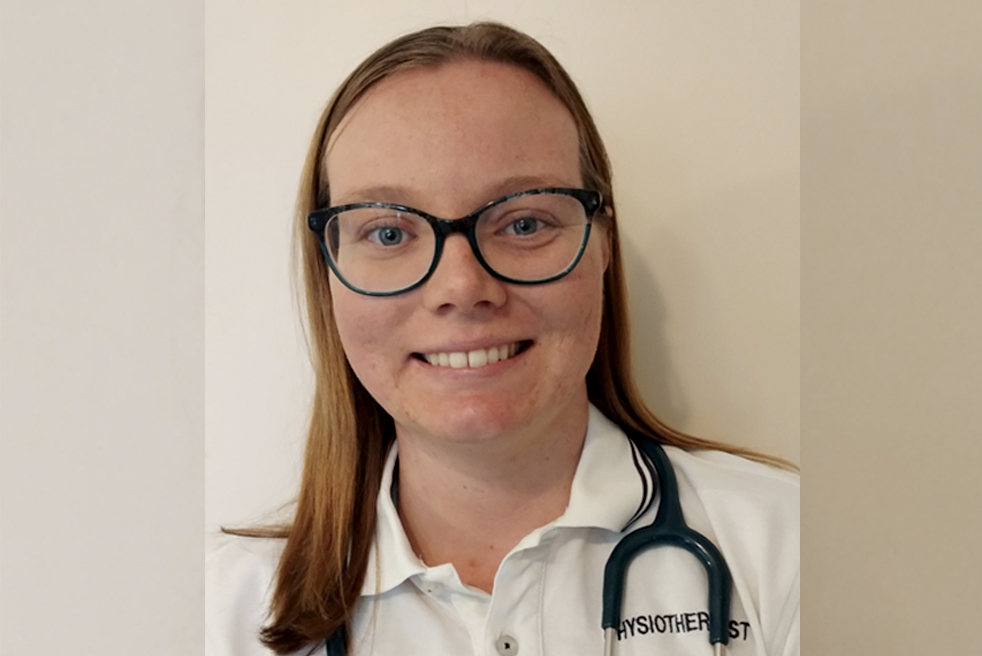
I'm Helena, and I'm a rotational physiotherapist working within the NHS in an acute hospital. I am disabled, with several conditions. Some are largely-hidden, like Ehlers-Danlos syndrome, and some are completely hidden.
My day usually looks similar to other physiotherapists’. I work full-time, I spend most of my day clinically assessing and treating patients, and I also get involved in non-clinical work like in-service training, supporting therapy assistants and other projects.
Some days you wouldn’t know I'm disabled. But other days I experience pain, fatigue and other symptoms.
I love what I do. As a physiotherapist, I look at the whole person rather than just their condition. Their home environment, job, social network and wider circumstances can all have a huge impact on their health. I also love the variety of opportunities within physiotherapy, from clinical practice to education, research and influencing policy.
But it’s often it’s the smallest actions that make the biggest difference. Like taking someone who's had a prolonged hospital stay into the garden and seeing their face light up.
My journey
I have known since I was a child that I wanted to work in healthcare and make a difference to people's lives. But my path to becoming a physiotherapist hasn’t been easy.
When I was about 16, a doctor questioned how I would ever manage to become a physiotherapist with my conditions. Throughout university, each placement brought different challenges – each time I enter a new environment, I need different adjustments, and I can’t be sure what they are until I’m actually there.
Even in my current role, every rotation presents a new challenge: I have to build a new relationship with a supervisor and trust that they will believe me, understand my needs and implement my reasonable adjustments. Because my disabilities are largely hidden, it can feel like having to explain and justify myself all over again.
But I'm quite determined, and when I encounter barriers, I tend to look for a way around them rather than accepting them.
Through my experiences, I learned that my conditions are all manageable with the right support. I became a better problem-solver, developed a strong eye for detail and gained an understanding of what it's like to be on the receiving end of healthcare.
I often speak at university open days promoting physiotherapy. My hope is that, if someone is questioning whether they can be a physio because of their disability, I can reassure them that with the right support, they can. Maybe I can spark the same passion for it that I have.
What I’ve learned
I’ve learned a lot through my journey, and this is what I'd pass on to anyone starting out.
Don't feel you have to fit a particular mould to belong in healthcare. Don't underestimate the value your own experiences can bring.
Advocate for yourself, ask for adjustments and don't be afraid to visit Occupational Health. Don’t to be afraid to keep going back to them: your initial adjustments aren't necessarily designed to last forever; they should evolve as your health and role change.
And most importantly, remember that you can only look after your patients if you look after yourself first.
Resources
Some of the resources I have found helpful include:
- Occupational Health (speak to your manager or HR department)
- Access to Work (practical and financial support for people with long-term conditions)
- My workplace advisor (through my local NHS counselling service)
- For physiotherapists, I’d recommend the Chartered Society of Physiotherapists (CSP), particularly its guidance on reasonable adjustments and access to representatives and stewards for further advice
The CSP’s Disability Network committee (which I volunteer for) is always looking at initiatives to positively impact disabled physiotherapists’ careers and I’d encourage anyone in the same position to reach out to them.